


Best Gynecologist in Chennai
How stress levels impact your IVF sucess rate and how to manage it
By Dr. V. Bharathi, MBBS MS(OBG) FRM | Chief Infertility Specialist, Bharati Fertility Women's Center, Chennai
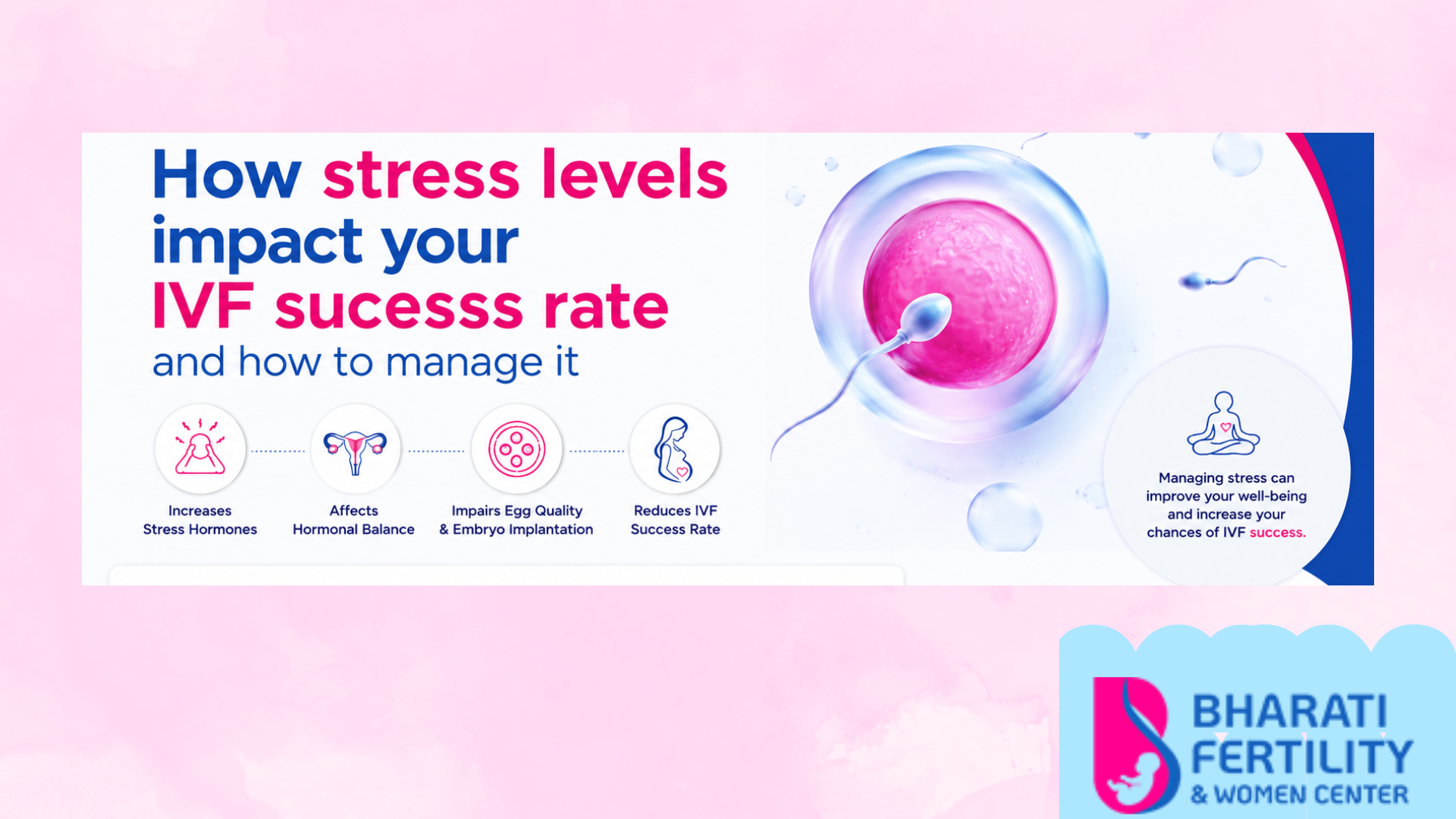
HOW STRESS LEVELS IMPACT YOUR IVF SUCCESS RATE
When couples come to Bharati Fertility Women's Center for IVF, they come prepared-with test reports, medication schedules, and carefully planned leave from work. What many do not come prepared for is the emotional weight of the process itself. The injections, the waiting, the hope, the uncertainty-IVF is not just a medical procedure. It is an intensely human experience, and stress is an unavoidable companion along the way.
But here is what Dr. V. Bharathi consistently tells patients: stress is not just an emotional challenge. It has real, measurable biological effects on your body-and managing it is not a luxury, it is a clinical priority.
This blog explores the science behind stress and IVF outcomes, and offers practical, evidence-informed strategies to protect both your mental wellbeing and your chances of success.
The Biology of Stress: What Happens in Your Body
To understand why stress matters during IVF, it helps to understand what stress actually does to the body at a hormonal level.
When you experience stress-whether it is psychological (anxiety, fear, work pressure) or physical (poor sleep, over-exercise, illness)-your body activates the hypothalamic-pituitary-adrenal (HPA) axis. This triggers the release of cortisol and adrenaline, your primary stress hormones.
In the short term, this is a survival mechanism. But when stress is chronic and sustained-as it often is during an IVF cycle-elevated cortisol has several consequences that directly affect reproductive function:
Cortisol suppresses the HPO axis:
The hypothalamic-pituitary-ovarian (HPO) axis regulates the hormones that control ovulation, egg development, and the menstrual cycle. Cortisol actively interferes with this axis, suppressing the release of GnRH, LH, and FSH-the very hormones that IVF medications are working hard to stimulate.
Cortisol affects uterine receptivity:
Research has shown that elevated stress hormones can reduce blood flow to the uterus and alter the endometrial environment, potentially making implantation less likely.
Stress disrupts sleep:
Poor sleep elevates cortisol further, creates a vicious cycle, and deprives the body of the restorative processes it needs during an IVF cycle.
Oxidative stress:
Psychological stress increases the production of reactive oxygen species (free radicals) in the body, which can damage egg quality and, in men, sperm DNA integrity.
What Does the Research Say?
The relationship between stress and IVF outcomes has been studied extensively, and while results are nuanced, the weight of evidence is clear: chronic, unmanaged stress is associated with lower IVF success rates.
Studies have found that women with higher levels of stress hormones at the time of egg retrieval had lower fertilisation rates and fewer high-quality embryos. Research also shows that women who received psychological support or mind-body interventions during IVF had significantly higher pregnancy rates compared to those who did not.
At Bharati Fertility Women's Center, Dr. V. Bharathi incorporates stress awareness and emotional support into the IVF care pathway-because the evidence supports it, and because it is the right thing to do for patients.
Identifying your stress triggers During IVF
Understanding what is driving your stress is the first step toward managing it. Common stress triggers during an IVF cycle include:
The fear of failure
Having invested emotionally and financially in IVF, the fear that it will not work is ever-present. This anticipatory anxiety can be debilitating.
Physical discomfort
Daily injections, bloating from ovarian stimulation, and the physical demands of monitoring appointments create a continuous physical burden.
The two weeks wait:
The period between embryo transfer and the pregnancy test is widely described by patients as the most psychologically difficult part of the entire IVF journey.
Relationship strain
Infertility and IVF place enormous pressure on couples. Differences in coping styles, communication breakdowns, and the stress of coordinated medical schedules can create tension.
Workplace pressure
Many women manage IVF while continuing to work full-time, attending early-morning monitoring appointments and managing medication schedules without colleagues knowing-a significant source of hidden stress.
Social pressure
In Chennai's family-oriented culture, questions about when you plan to have children-however well-intentioned-can be a constant source of distress for couples undergoing fertility treatment.
Practical Strategies to Manage Stress During IVF
Dr. V. Bharathi and the team at Bharati Fertility Women's Center recommend a holistic approach to stress management during IVF. These strategies are grounded in evidence and adapted for real life.
1. Mindfulness and Meditation
Mindfulness-based stress reduction (MBSR) has been shown to lower cortisol levels and improve psychological outcomes in women undergoing IVF. Even 10–15 minutes of guided meditation per day-using an app like Calm or Headspace-can make a meaningful difference. The practice of being present and releasing the need to control outcomes is particularly powerful during the two-week wait.
2. Gentle, Consistent Exercise
Moderate exercise-walking, yoga, gentle swimming, or stretching-is beneficial during most phases of an IVF cycle. It reduces cortisol, improves mood through endorphin release, promotes better sleep, and improves circulation. However, it is important to avoid intense exercise, particularly during and after ovarian stimulation, when the ovaries are enlarged and the risk of ovarian torsion is present. Dr. V. Bharathi provides specific guidance on exercise restrictions at each stage of the cycle at Bharati Fertility Women's Center.
3. Yoga and Breathing Techniques
Yoga-particularly restorative and fertility-focused yoga-has been increasingly integrated into IVF support programmes globally. Pranayama (breathing exercises) such as deep diaphragmatic breathing and alternate nostril breathing are simple, effective tools to activate the parasympathetic nervous system and counteract the stress response. They can be done anywhere, at any time, including in the waiting room.
4. Nutritional Support
What you eat directly affects your stress resilience. A diet rich in magnesium (found in leafy greens, nuts, and seeds), omega-3 fatty acids (found in flaxseed, walnuts, and fatty fish), and B vitamins supports healthy cortisol regulation and nervous system function. Reducing caffeine and sugar-both of which spike and crash energy levels and worsen anxiety-is strongly advised during an IVF cycle.
At Bharati Fertility Women's Center, patients are provided with nutritional guidance specific to their IVF phase.
5. Prioritise Sleep
Sleep is when the body repairs, regulates hormones, and prepares for the demands of the next day. During an IVF cycle, sleep should be treated as a non-negotiable medical requirement. Aim for 7–9 hours per night. Establish a consistent sleep routine, limit screen time in the hour before bed, and keep your bedroom cool and dark. If insomnia is a persistent issue, speak with Dr. V. Bharathi or the counselling team at Bharati Fertility Women's Center.
Sleep is when the body repairs, regulates hormones, and prepares for the demands of the next day. During an IVF cycle, sleep should be treated as a non-negotiable medical requirement. Aim for 7–9 hours per night. Establish a consistent sleep routine, limit screen time in the hour before bed, and keep your bedroom cool and dark. If insomnia is a persistent issue, speak with Dr. V. Bharathi or the counselling team at Bharati Fertility Women's Center.
6. Seek emotional support
You do not have to carry this alone. Sharing your experience with a trusted friend, a family member, or a counsellor can significantly reduce the emotional load of IVF. Professional psychological support-from a therapist experienced in infertility and assisted reproduction — is particularly valuable for couples who have experienced previous IVF failures or pregnancy loss.
At Bharati Fertility Women's Center, step-by-step counselling is an integral part of the patient care model. Dr. V. Bharathi believes that emotional support is not an add-on-it is core to the treatment.
7. Limit Information Overload
In the age of the internet, it is tempting to spend hours researching beta hCG levels, reading forum posts about IVF outcomes, and comparing your experience to others. This invariably increases anxiety without providing any useful clarity. Trust the process, trust your medical team, and limit your information intake to conversations with Dr. V. Bharathi and the team at Bharati Fertility Women's Center.
8. Communicate Openly With Your Partner
IVF is a shared journey, but men and women often process stress very differently. Open, regular communication-about fears, expectations, and needs-strengthens the couple's bond and prevents misunderstandings that can escalate into conflict during an already stressful time.
A Note on the Two-Week Wait
The two-week wait after embryo transfer deserves special mention, because it is the period during which stress is at its absolute peak and there is, genuinely, very little you can do medically. The embryo is in the uterus; your body is doing its work.
Dr. V. Bharathi advises patients at Bharati Fertility Women's Center to approach the two-week wait as a period of intentional self-care rather than watchful anxiety. Continue your medications as prescribed. Eat well. Sleep. Walk. Connect with people you love. Engage in activities that bring you joy and calm. Avoid Googling symptoms. And trust that everything that can be done medically has been done.
You Are More Than Your IVF Result
This is perhaps the most important thing Dr. V. Bharathi wants every patient at Bharati Fertility Women's Center to hear: your worth, your identity, and your future are not determined by the outcome of a single IVF cycle. Setbacks happen. They are painful. But they are not the end of the story.
Managing stress during IVF is not about guaranteeing a positive outcome-it is about giving yourself the best possible chance, while also protecting your mental and emotional health regardless of the result.
At Bharati Fertility Women's Center, we are with you through every step of this journey-not just medically, but as human beings who understand what is at stake.
For compassionate, comprehensive IVF care in Chennai, , contact Bharati Fertility Women's Center at +91 82 2005 2005 or Click here to book appointment
Locations: Mandaveli | Urapakkam | Ambattur| Avadi-Chennai
Bharati Fertility Centre-Turning Hope into Happiness.